Adaptive driving

QuicStick Portable Hand Controls for Disabled Drivers

Skeptical of 'installs in minutes' claims? QuicStick levers clamp onto your factory gas and brake pedals with quick-connect hardware, no drilling and no wiring.

  • Installs in under 10 minutes, tool-free
  • Fully mechanical, nothing to charge or pair
  • Family-run San Diego shop since 2014
  • 4.4★ from 1,186 verified reviews
  • 10 min to install
  • 30-day retailer returns
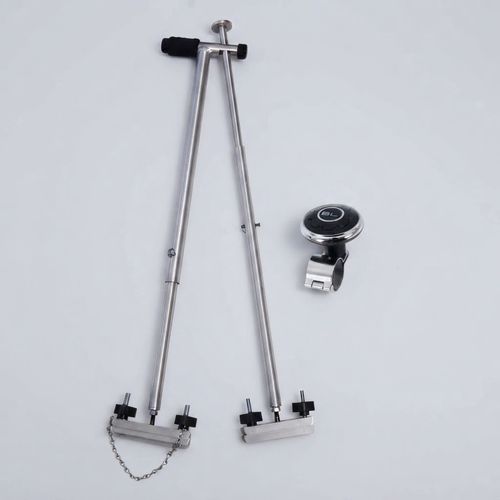
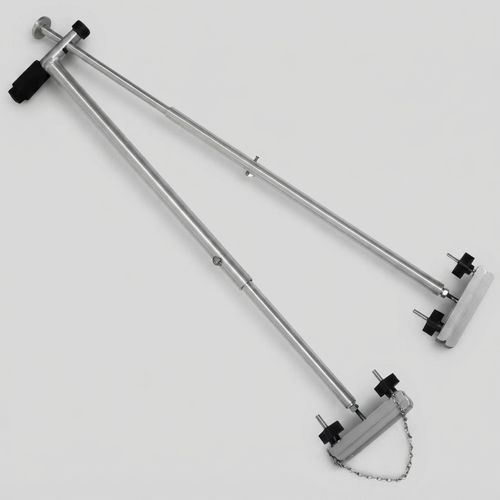
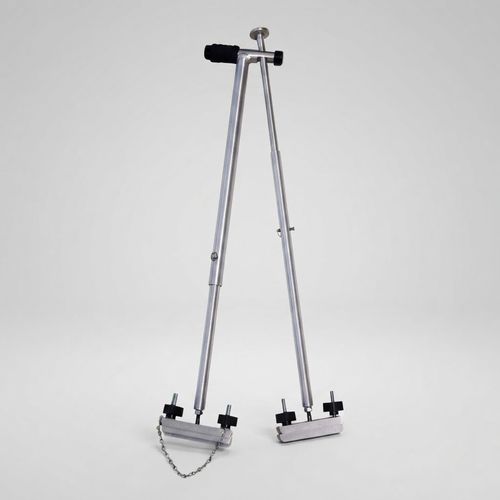
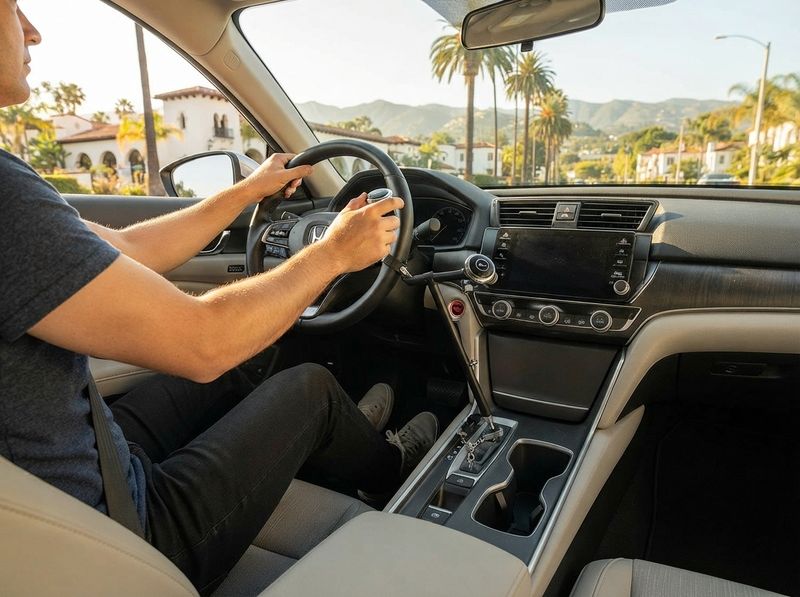
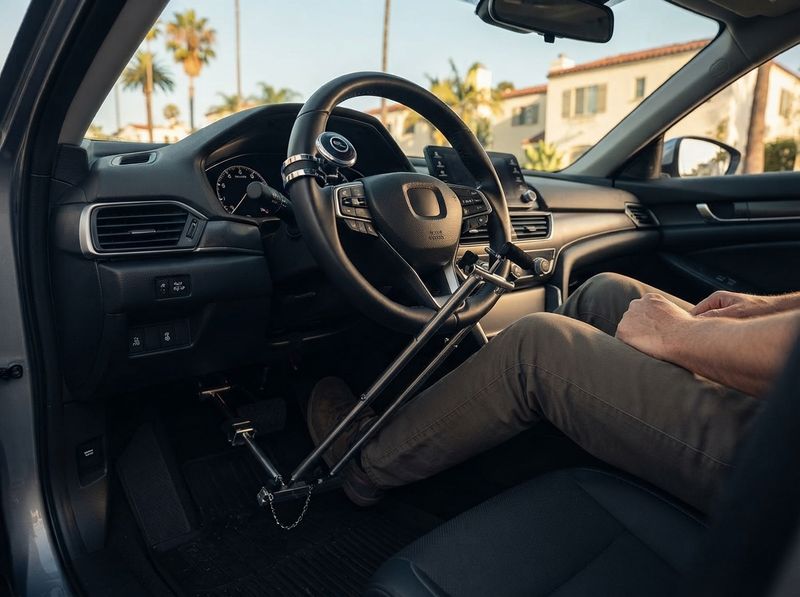
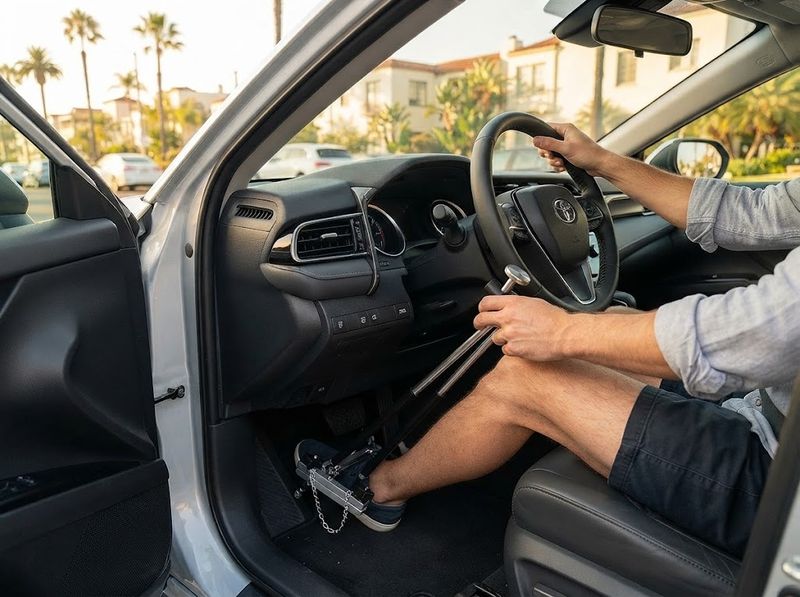
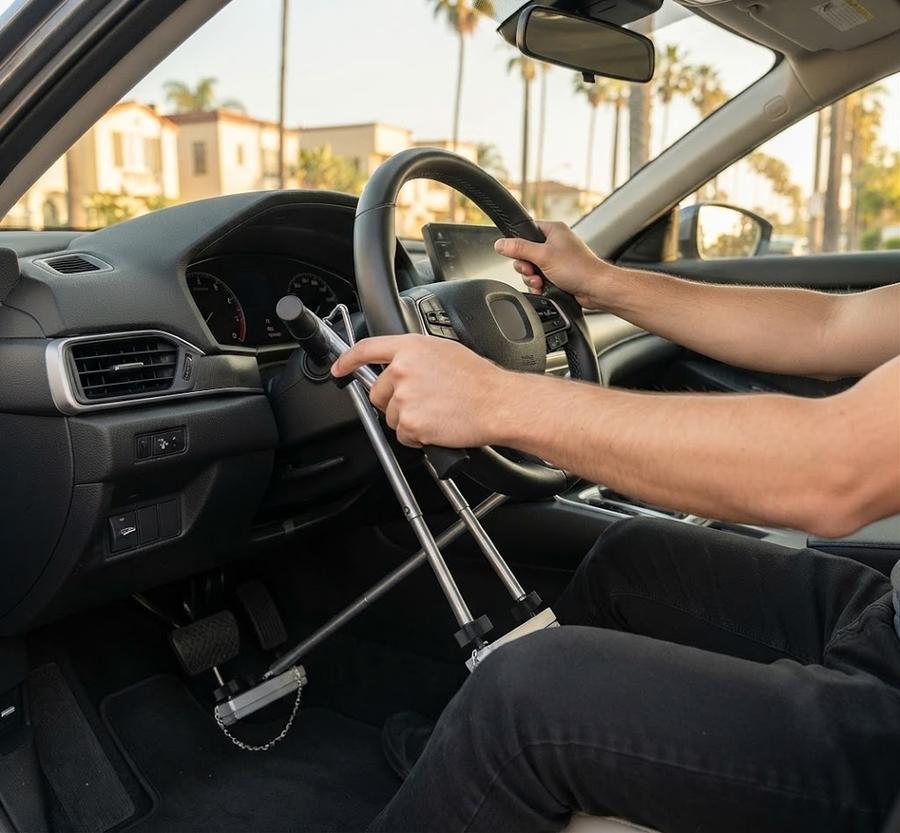
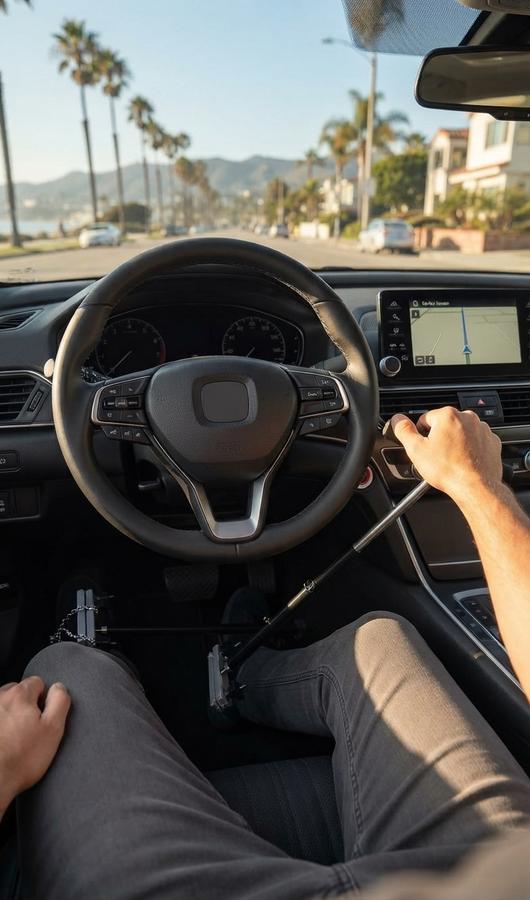
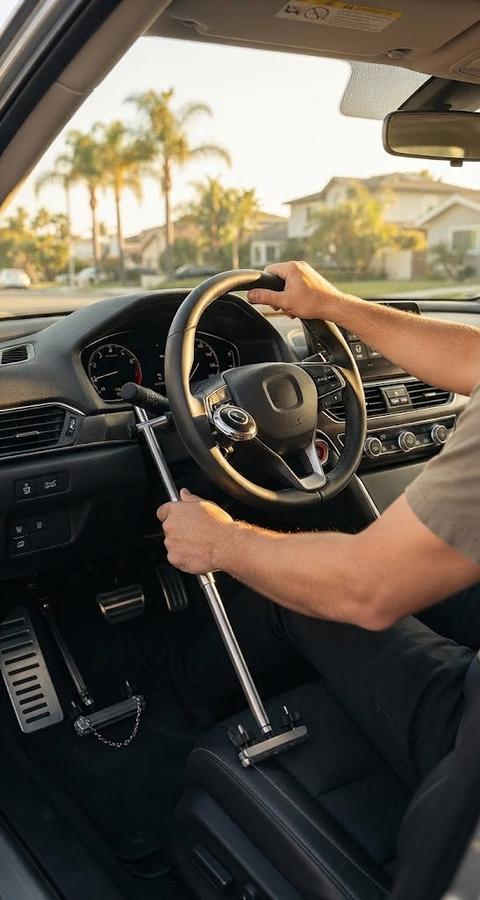
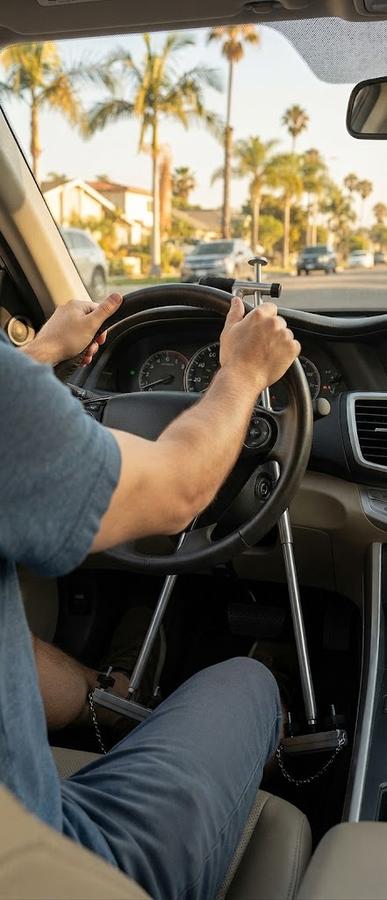
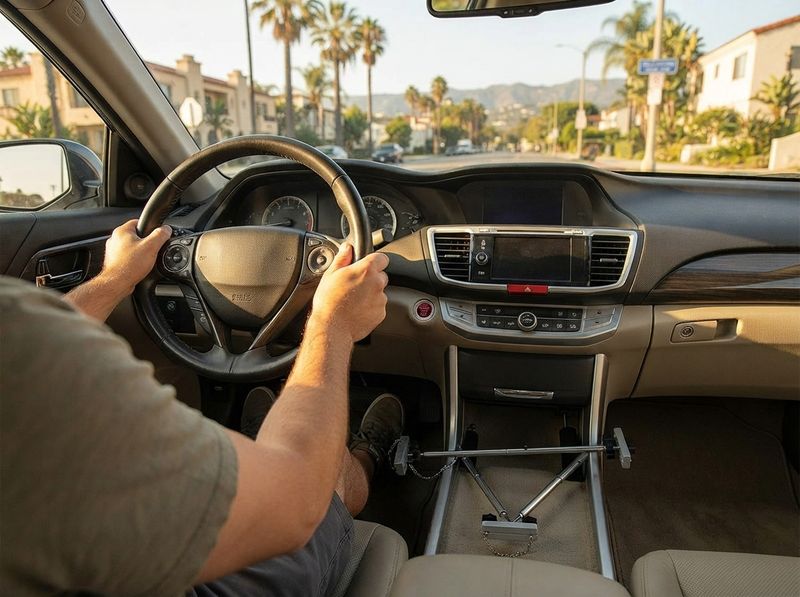
QuicStick levers clamped to the gas and brake pedals of an automatic sedan

Which QuicStick lever belongs in your footwell

Every QuicStick model clamps to the factory gas and brake pedals; the real split is thumb-controlled versus push/pull, not good versus better.

QuicStick Thumb-Controlled Hand Control

QuicStick Thumb-Controlled Hand Control

4.4★ (553 reviews)

Rest your thumb on the paddle and the throttle answers without a full-hand pull, which matters when the other arm is already holding the wheel. Creep through a stop-and-go commute for twenty minutes and the throttle stays smooth, because thumb travel meters the pedal instead of snapping it open. Where a two-lever setup asks both hands to work at once, this one keeps the second hand free for steering, at the cost of some palm pressure on drives past thirty minutes. At 4 pounds this is the heaviest one here, which you notice lifting it into an overhead bin and nowhere else.

  • Thumb paddle meters gas with one hand, leaving the other on the wheel through a full turn
  • Short linkage turns a quarter-inch of thumb travel into a measured pedal push, no on-off jab
  • Cross a state line mid-trip and this citation still covers the lever, the only one here stating all 50 states
Check today's price
QuicStick Push/Pull Hand Controls, Model B-1001

QuicStick Push/Pull Hand Controls, Model B-1001

4.4★ (135 reviews)

Ease the left lever forward at a stoplight to brake, draw the right one back to pull away, and neither motion touches the other. Brake hard for a deer at dusk and the throttle stays where you left it, because a separate linkage runs to each pedal arm. Where a single combined lever forces one wrist motion to cover both jobs, this pair lets the stronger arm brake after a shoulder injury on the other side. At 2 pounds it is the lightest push/pull unit here, and both clamps come off in under a minute when a passenger takes the wheel. Owner reviews say it plainly: add lock washers to the wing nuts and tug both clamps before every drive.

  • 2 pounds, both levers off the pedals in under a minute before a passenger drives
  • Separate linkage per pedal arm keeps a panic stop from feeding the throttle on a wet off-ramp
  • Call or email the maker the week a wing nut backs off, and the same bench that built it answers
Check today's price
QuicStick Push/Pull Hand Controls, Model NA-1000

QuicStick Push/Pull Hand Controls, Model NA-1000

4.3★ (225 reviews)

Measure the distance from your seat back to the pedal face before ordering, because reach decides whether this lever works for you. Pull the pin, slide the inner tube to your seat position, and drop it back in: no set screws to strip on the next adjustment. One reviewer at five foot nine found the stock holes short in a tall SUV and had extra holes drilled at a machine shop, which is worth knowing before it arrives. At 2 pounds the unit unclamps in under a minute for the next vehicle. Add locking nuts on each clamp bolt, then tug both levers for fifteen seconds before backing out, and the wing nuts stop working loose.

  • Work the brake lever alone on a right-foot injury, or run both levers together once the gas pedal is out too
  • Pin through both tubes carries the load, so the length you set in the driveway still holds a year later
  • Read the 225 verified buyer reviews and reach fit dominates the setup talk, ahead of every other detail
Check today's price
QuicStick Gas and Brake Hand Control

QuicStick Gas and Brake Hand Control

4.2★ (200 reviews)

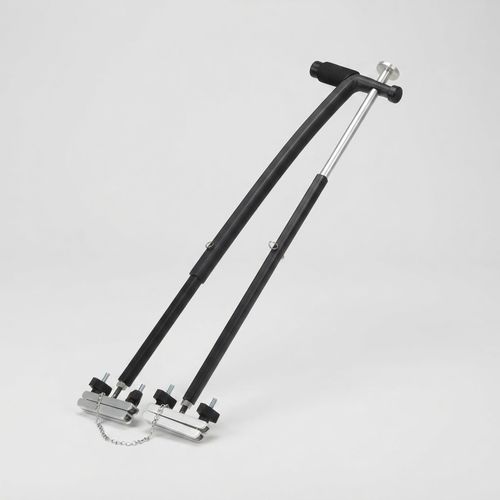
Fold this one into the travel bag at 3 pounds and it rides in an overhead bin, then clamps onto the next automatic at the far end. Wipe down the T-30 aircraft-grade aluminum body after a winter of daily pedal duty and no pitting shows, where softer alloy clamps mark and roughen. Open the box to a steering knob already inside, though owners often swap that knob for a bearing-equipped one before the first long drive. Slide the seat where you actually drive, re-pin the tube, and the reach lands without a trip to a machine shop.

  • 3 pounds folded into the travel bag, cleared for an overhead bin on a domestic flight
  • Hand-tightened wing nuts bite the pedal arm, so the lever comes off in under a minute at the rental return
  • Drive it the first week and, if the reach comes up short, it ships back inside the retailer's return window
Check today's price
QuicStick Portable Car Hand Controls

QuicStick Portable Car Hand Controls

4.2★ (73 reviews)

Broken ankle Monday, driving Wednesday: this listing states the widest vehicle language of the group, covering cars, trucks, and powersports, foreign and domestic. Quick-connect hardware sets height in seconds and reconfigures for a left-handed or right-handed driver, so the same unit follows a driver between two households. Where a permanent install ties the hardware to one vehicle identification number, this 2.95-pound pair follows the person instead. Some 2006-and-newer hybrids need a different clamp shape, so confirm the pedal profile before ordering. The family shop in San Diego takes questions by phone and email before you buy.

  • 2.95 pounds reconfigured for left-hand or right-hand operation in seconds, no tools
  • Quick-connect hardware sets height by pin, so the same unit moves between two vehicles
  • Widest stated vehicle coverage here: cars, trucks, and powersports, foreign and domestic
Check today's price

From Box to Driveway Without a Single Tool

QuicStick ships fully assembled, so the whole sequence below runs about 10 minutes on a standard flat pedal with no drilling anywhere.

  1. 1

    Clamp Both Pedals

    Seat each clamp flat against the gas and brake pedal arm, then hand-tighten the wing nuts.

  2. 2

    Set the Reach

    Pull the pin, slide the tube through about 6 inches of travel, re-pin at your seat position.

  3. 3

    Fit the Spinner Knob

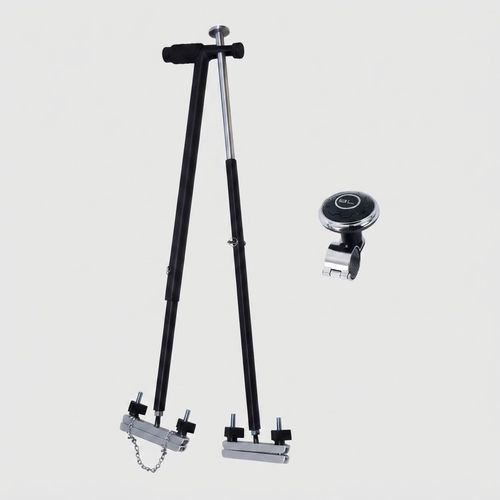
    Clamp the optional steering knob at ten o'clock if one hand will hold the wheel alone.

  4. 4

    Practice in an Empty Lot

    Roll ten slow laps before traffic, one hand steering, the other hand metering both levers.

The Driving Moments This Linkage Was Built Around

QuicStick levers get judged on the merge, the hard stop, the vehicle swap, and the grip match, so each block below opens on one.

QuicStick Gas and Brake Hand Control clamped in a sedan footwell

Brake and Gas, Metered Separately by Each Hand

QuicStick's push/pull pair holds a steady 45 mph through twenty minutes of interstate throttle, and the braking hand never brushes the throttle lever once. Push the left lever forward at the ramp end and only the brake arm travels, so the car settles instead of lurching.

  • Pull the right lever a hair on a downhill merge and the throttle answers while the brake arm stays parked.
  • Pull the lever and the pedal arm moves in the same instant, because the force runs straight down the linkage with no sensor in between.
  • Where one combined lever asks a single wrist to do both jobs, a weak right hand can hold the throttle while the stronger left arm brakes at every light.
See the gas and brake pair
Mechanical lever linkage running to the pedals, no wiring anywhere

No Wiring, No Battery, Nothing to Pair

QuicStick runs a fully mechanical lever linkage, with no wiring harness, control module, or battery anywhere in the assembly. Electronic hand control systems add a power path that can fail on a cold morning. Park outside overnight below freezing and this linkage pulls at the same weight in the morning, with no calibration screen and no low-battery icon standing between you and the ignition.

  • Sit down after a night at 15 degrees and the lever moves at August effort, because aluminum and steel carry the load.
  • Nothing to charge before a road trip: the linkage draws its power from your arm, not the vehicle harness.
  • Where an electronic system needs a technician and a diagnostic port, a stuck pivot here takes a shot of lubricant.
See the fully mechanical model
The same lever pair clamped into a second vehicle through the open door

One Lever That Moves From the Sedan to the Truck to the RZR

QuicStick clamps onto automatic cars, trucks, and powersports vehicles alike, so one lever pair covers the driveway, the job site, and the trail. A wheelchair user described running the same push/pull lever through a van, a pickup, a sedan, and an off-road RZR. Unclamping takes under a minute per pedal, and the bag rides behind the seat between vehicles.

  • Unclamp both levers Friday night, fold them into the bag, and clamp onto the work truck before Saturday's first errand.
  • Check the pedal profile before ordering: some Toyota pedals from 2003 onward take a different clamp shape, sold separately.
  • Where a permanent install ties the hardware to one VIN, this pair rides in the bag and clamps onto whatever sits in the driveway Monday morning.
See the 2.95-pound travel pair
Driver metering a QuicStick lever with the other hand on the wheel

Thumb Lever or Push/Pull, Matched to Your Grip

QuicStick splits into a thumb-controlled lever and a family of push/pull levers, and grip strength decides which one belongs in your car. The thumb model meters acceleration under one thumb, so your free hand stays on the wheel through a merge that needs steering and gas at once. Full-hand users take the push/pull pair for finer braking, one lever per pedal, and report steadier stops after the first month of driving.

  • Hold a coffee mug for a minute: if the grip fades, the thumb paddle asks less of the hand than a full-hand pull.
  • The thumb version trades hand effort for palm pressure, so commuters past 30 minutes report the paddle digging into the palm.
  • Where a full-hand pull tires an arm over a long commute, the paddle asks for thumb pressure, which is the trade owners describe after the first week.
See the NHTSA-cited thumb lever

Why Drivers Pick a Clamp-On Lever Over a Permanent Install

Portable hand controls for cars trade a 3-to-6-hour shop appointment for 10 driveway minutes, and each reason here carries a number from the spec sheet.

  1. 01

    Skip the Certification Class Before Your First Drive

    A permanent system needs a DMV certification class booked before install day. This lever clamps to the pedals already in the car, so the first drive happens that afternoon.

  2. 02

    Two Bolts and a Wrench, Twice a Year

    Nothing charges, pairs, or updates. Torque the clamp bolts every six months and the mechanical linkage pulls at the same weight it did on day one.

  3. 03

    Adjust the Reach, Then Drive to the Store

    Pull the pin, slide the tube to your seating position, drop the pin back in. Setting reach in the driveway takes less time than backing out of it.

  4. 04

    2 to 4 Pounds, Folded Into the Carry Bag

    Fold the lever, drop it in the bag, and it rides in the overhead bin instead of the checked-luggage hold where adaptive equipment goes missing for two days.

  5. 05

    Gas and Brake on Separate Levers

    The push/pull pair moves independently, so a light brake touch never feeds the throttle. Drivers with reduced grip meter each lever at its own pace through stop-and-go traffic.

  6. 06

    Built on the Same San Diego Bench Since 2014

    No warranty term appears in the current listings, so weigh the record instead. One family shop has machined this linkage for more than a decade and still answers by phone and email.

What the 1,186 verified reviews sound like up close

Six owner accounts across the thumb paddle and the push/pull pairs, mixed reports included.

★★★★★

After a spinal cord injury last spring I had written off driving for good. The thumb paddle went on my wife's sedan in about eight minutes and I drove to my own physical therapy appointment four days later. Metering the throttle under one thumb took maybe two parking-lot sessions to stop feeling deliberate. My right hand never has to leave the wheel through a turn.
Marcus T. Verified Purchase, Thumb-Controlled Hand Control

★★★★★

Two weeks in and I have used these every workday, plus grocery runs and one 90-minute trip up the coast. Installation is genuinely simple, though getting down by the pedals is the awkward part if your mobility is limited. Take the advice in the other reviews and add lock washers to the wing nuts on day one. I tug both clamps before every drive and nothing has shifted since.
Dana R. Verified Purchase, Push/Pull Hand Controls, Model B-1001

★★★★

Nine months, four different vehicles, including a rental in Phoenix that I clamped up in the parking structure. The pair weighs under three pounds and lives in a bag behind my seat. One honest caution: it is your hands doing both jobs now, so plan your coffee before you pull out. Swapping between the sedan and my brother's truck takes about a minute per pedal.
Priya S. Verified Purchase, Portable Car Hand Controls

★★★★

Our son is learning to drive and he is paraplegic, so foot pedals were out. He does not own a car yet, which ruled out anything permanent. These hooked to the Sienna pedals easily. The gas lever came up barely longer than the brake at first and we had to adjust that before it felt right. Once we sorted the geometry, he was doing laps in an empty lot the same weekend.
Ellen K. Verified Purchase, Gas and Brake Hand Control

★★★★★

I am five foot nine and put this in a tall SUV. The stock pin holes came up short, so I could not reach the wheel comfortably without the levers pressing into my stomach. A machine shop drilled three extra holes for me and it has been fine since, but measure from your seat back to the pedal face before you order. On a sedan I suspect the stock range would have been plenty.
Ray M. Verified Purchase, Push/Pull Hand Controls, Model NA-1000

★★★★★

Pleasantly surprised at how well this works for no-feet driving. It did not take long to get comfortable. I probably would not choose it for a cross-country haul, because the paddle presses into the palm past the half-hour mark, but for errands and the school run it changed my week. Ten slow laps around an empty lot first, exactly as the instructions say.
Carla V. Verified Purchase, Thumb-Controlled Hand Control

The Specs Other Hand-Control Listings Leave Vague

QuicStick states install time in minutes, reach in inches, and folded weight in pounds: measure yours against the pedals in your own footwell first.

Under 10 minutes

Clamp both levers onto the gas and brake pedals in the driveway, tighten the wing nuts by hand, and the first drive starts inside 10 minutes.

Rival listings promise a 'quick install' and never name the number; here you know the minute count before you reach for a wrench you will not need.

manufacturer spec, stated on every current listing

About 6 inches of adjustment

Slide the inner tube through roughly 6 inches of travel and re-pin it, which covers drivers well outside average height without a custom order.

Order blind elsewhere and the pin holes come up short in your footwell; here you check the inches and re-pin once in the driveway.

owner-verified adjustment measurement

2 to 4 pounds, folded

Fold the lever into its carry bag and tuck it into an overhead bin: at 2 to 4 pounds depending on mechanism, it travels as carry-on rather than cargo.

Rival pages show the bag and skip the weight; here you hand the folded lever to a gate agent knowing it clears the overhead bin.

manufacturer spec sheet, weights measured per model

T-30 aircraft-grade aluminum

Run a fingernail down the 3-pound push/pull body after a winter of daily pedal engagement: T-30 aluminum resists the pitting that shows up on softer alloy clamps.

A rival page stops at 'aircraft-grade aluminum'; scan this spec line before ordering and T-30 is printed there in full.

manufacturer material spec, stated on the 3-pound push/pull listing only

NHTSA citation, all 50 states

Hand your state examiner the box at the road test and the NHTSA citation on the thumb-controlled lever covers all 50 states, no second appointment.

Most pages attach the certification to a brand name; hold this one against the model number on the box before ordering and the two match.

manufacturer certification, thumb-controlled listing only

4.3 stars, 1,186 verified reviews

Sort the ratings by model and the spread runs 4.2 to 4.4 stars, with the 1-star band clustering on loose clamp hardware rather than on the linkage itself.

A roundup page hands you a rank with no review count behind it; sort these 1,186 verified reviews by model instead.

aggregated verified buyer reviews across every current listing

Machining since 2014

Clamp a lever ordered this month onto the same pedals a 2014 buyer used, and the mechanical linkage between them has not changed a part.

Buying guides skip the build history; pull up the trademark filing yourself and the same linkage traces back through more than a decade of pedals.

business registration and trademark filing records

The San Diego Shop That Has Machined This Linkage Since 2014

Your left leg cannot work the pedals, and the permanent route means a certification class before anyone touches your car. These levers clamp onto the pedals already sitting in your footwell. Push for brake, pull for gas, each lever moving on its own. Pull them off in the driveway when your passenger needs the seat.

QuicStick has built hand controls for disabled drivers out of one family-run San Diego shop since 2014, and the linkage on sale today is the one it started with. No warranty term appears in the current listings, which is worth knowing before you order: what stands behind this hardware is production history and a phone line, not a printed guarantee.

Two owner accounts repeat across the reviews. A wheelchair user ran a single push/pull lever through a van, a pickup, a sedan, and an off-road RZR without buying a second set, and skipped the certification class a permanent install would have demanded. A driver eight weeks into non-weight-bearing status after tibia surgery drove herself to her own appointments instead of asking friends for rides.

Both bought the same 2-to-4-pound lever that folds into a carry bag, and both sit inside the 4.3-star average across 1,186 verified buyer reviews. Neither booked a shop appointment. What you get is a mechanism narrow enough to describe honestly: it clamps to automatic pedals, it wants a torque check every six months, and it has done exactly that for more than a decade.

How this brand started

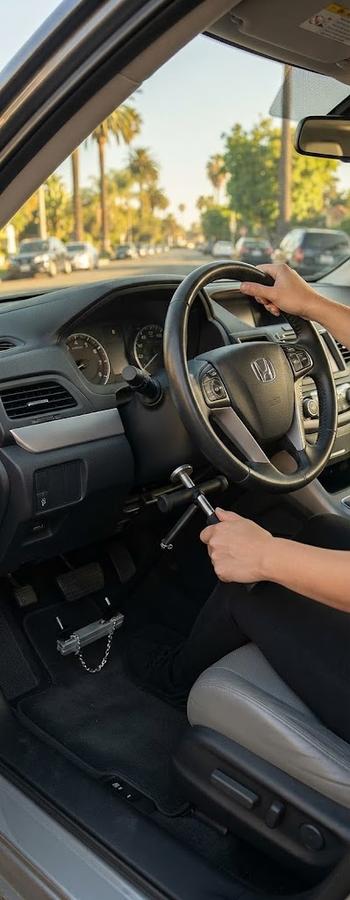
QuicStick levers clamped in an automatic sedan on a San Diego street

Day One to Year One on the Same Linkage

QuicStick ships assembled, so the first drive happens the day the box lands and the maintenance list stays one line long for years.

  1. Day 1

    Clamp both levers to the pedals, set the reach, and take ten slow laps around an empty lot. Do it while the retailer's return window is still open, so a bad fit costs an afternoon and nothing more.
  2. Week 1

    Metered braking stops feeling deliberate. Drivers with reduced leg strength describe the hand motion turning automatic somewhere around the fifth commute, roughly the point where the mirrors get checked without thinking again.

  3. Month 1

    The lever moves between vehicles without ceremony: off the sedan pedals Friday night, onto the work truck by Saturday breakfast, back again Sunday. The bag lives behind the seat in between.

  4. Year 1+

    One maintenance line item survives: torque the clamp hardware and lubricate the pivot points. Owners who drive daily report doing it every six months rather than waiting the full year.

Ready for Day 1? Compare the thumb paddle and the push/pull pair side by side.

What Owners Actually Complain About

Loose clamps, rattling hardware, and one reported crash sit in the 1-star reviews, paired here with the inspection habit that answers each.

The Wing Nuts Back Off After a Few Weeks

Loose hardware is the single most repeated complaint in the 1-star and 3-star reviews

Rattling hardware shows up repeatedly in owner reviews, and butterfly nuts working loose is the most common version. Lock washers or locking nuts on each clamp bolt end it for good. Owners who drive daily check tightness before the first trip of the week, which takes about fifteen seconds per pedal.

A Brake Clamp Came Loose at 40 mph

One documented clamp-failure incident in the buyer reviews for the 2-pound push/pull model

One reviewer describes a paraplegic driver whose brake clamp separated from the pedal on the approach to a light. The car was totaled at roughly 40 mph and nobody was hurt. Treat a pre-drive tug on both clamps as non-negotiable, the way a pilot walks the wing before takeoff. A clamp that rocks under hand pressure is not seated.

Two Levers and a Steering Wheel With One Working Arm

Reviewers consistently flag weak upper-body strength as the disqualifying factor, not disability type

Drivers with limited grip describe fighting the throttle lever while steering. The thumb-controlled model puts acceleration under a single thumb instead of a full-hand pull, which frees the second hand. Add the spinner knob at ten o'clock and the steering hand never leaves the wheel through a turn.

Bought for a Manual and It Will Not Work

Automatic transmission required across every current model

Mechanical hand controls in this category clamp to gas and brake only, which leaves a clutch pedal unserved. Confirm the transmission before ordering. One owner did press a clutch by hand with a single lever after a foot injury, but that is improvisation rather than a supported configuration, and no listing certifies it.

No Warranty Term to Point At If Something Fails

Manufacturing continuously since 2014, family-owned

Current listings publish no warranty length and no return policy beyond the retailer's standard window, and inventing one here would help nobody. The honest substitute reads like this: the same San Diego family shop has machined this linkage since 2014 and still takes calls and email. Order through a retailer whose return window covers a real test week, then torque-check before it closes.

Torque-check inside the retailer's return window, then pick a lever to compare specs.

When the Levers Come Out of the Bag

QuicStick fits automatic cars, trucks, and powersports vehicles, which is why the same lever turns up in a morning commute and on a trail.

The Thirty-Minute Automatic Commute

Pull the right lever for throttle out of the driveway, push the left to slow at every light, and the same rhythm carries thirty minutes of stop-and-go without a foot touching a pedal.

Sedan on Weekdays, Work Truck on Saturday

Unclamp the pair Friday night, fold them into the bag, and reclamp onto the truck pedals before the Saturday supply run. Each swap costs about a minute per pedal.

First Week After Surgery, Boot Still On

Two weeks post-op with a foot in a boot, a driver clamps the levers on and drives to the follow-up appointment alone. When the boot comes off, the hardware comes off with it.

A Rental Counter in Another State

Clamp the levers onto the rental sedan in the parking structure before the shuttle leaves, then unclamp at the return counter so the car goes back untouched.

Trail Day in the RZR

Powersports vehicles get the same clamp treatment, and one wheelchair-using reviewer runs the lever in an RZR. Add the spinner knob and the steering hand stays put through washboard ruts.

Does a clamp-on lever fit your car, your grip, and your state?

Fit, install time, transmission, and road-test rules, answered before you clamp anything to a pedal.

What are QuicStick hand controls?

QuicStick builds portable mechanical hand controls that clamp onto a vehicle's factory gas and brake pedals so a driver works both by hand. The levers arrive fully assembled and mount without tools or drilling, typically in under 10 minutes. Two mechanism families exist: a thumb-controlled lever and a set of push/pull levers where gas and brake move independently. The manufacturer is a family-run shop in San Diego, California, in production since 2014.

Who are portable hand controls for cars actually built for?

Drivers who cannot safely work foot pedals form the core group: spinal cord injury, amputation, severe neuropathy, and temporary states like a broken ankle or post-surgical non-weight-bearing status. Reviews come from paraplegic drivers, wheelchair users, and people eight weeks out from tibia surgery alike. The common requirement is upper-body strength: you must hold the wheel with one hand while metering a lever with the other.

How do hand controls for gas and brake replace the pedals?

A clamp fastens to each pedal arm, and a rigid aluminum lever runs from that clamp back toward the driver's seat. Pulling or pushing the lever transmits force straight down the linkage to the pedal, exactly as a foot would. Nothing is wired, powered, or calibrated. The original pedals still work normally, so a passenger can drive the same car without removing anything.

What types of hand controls are available for disabled drivers?

Mechanical levers dominate the category and split by motion: push/pull, push/rock, and push/twist. Electronic hand controls form a separate class that uses powered actuators and typically requires professional installation. Supporting devices include steering spinner knobs and left-foot accelerators. QuicStick sits in the mechanical group, with a thumb-controlled lever and push/pull levers that operate gas and brake independently.

What is the difference between push/pull, push/rock, and push/twist hand controls?

Each name describes the wrist motion that triggers acceleration. Push/pull brakes with a forward push and accelerates with a pull toward the driver. Push/rock accelerates by rocking the hand downward while braking stays a push. Push/twist accelerates with a motorcycle-style twist. Choice comes down to which motion your hand and wrist can repeat comfortably for a full commute, not which is objectively better.

Is a portable hand control a real alternative to a permanent system?

For temporary injuries and multi-vehicle drivers, yes in practice: it clamps on in minutes, unclamps in under a minute, and moves between vehicles. For a driver whose state requires certified equipment before licensing, a permanent DMV-certified system may still be mandatory. Reviewers who used both describe portable levers as excellent for portability and temporary needs, and note they will not replace a permanent install for every situation.

How long does it take to learn to drive with hand controls?

Owners repeatedly describe about five minutes of parking-lot practice before the motion feels natural, and a few days before it stops requiring conscious thought. Larger primary control systems typically take around two weeks of practice; a clamp-on lever sits at the shorter end. The hardest habit to break is reflexive foot movement, which one reviewer with 55 years of pedal driving said still needed attention months in.

Does QuicStick offer a product warranty?

No warranty term appears in the current product listings, and no coverage length or scope is published anywhere in them. That gap deserves stating plainly rather than papering over, because on safety-critical hardware an invented guarantee is worse than an honest absence. What does exist is a record: the same family-owned San Diego shop has manufactured this mechanical linkage since 2014 and answers questions by phone and email. Order through a retailer whose standard return window gives you a real test week, then finish your torque check and a hard-stop test in an empty lot before that window closes. If a clamp rocks under hand pressure during that week, send the unit back rather than negotiating with it.

Is QuicStick NHTSA approved?

The thumb-controlled model's listing states NHTSA approval for all 50 states. That citation appears on that one listing only, so treat it as model-specific rather than covering every other model. If a certification claim matters for your state licensing process, choose the thumb-controlled unit and confirm the current documentation with the manufacturer before your road test.

How long has QuicStick been manufacturing hand controls?

Since 2014, per business registration and trademark filing records plus an earliest listing date of August 2014. Listing copy inconsistently claims 13 or 15 years depending on the page, so treat 2014 as the anchor. The shop is family-owned, in San Diego, California.

Does modifying a vehicle with adaptive equipment affect my auto insurance?

Notify your insurer before you drive with any added control, even a removable one. Standard policies do not automatically cover the cost of adaptive equipment, and some carriers ask for a note on the policy. A clamp-on lever leaves no permanent modification, which usually simplifies the conversation, but the disclosure still belongs on record before an incident rather than after.

Does Medicare or the VA cover the cost of hand controls?

Medicare Part B may reimburse devices that meet durable medical equipment criteria, which depends on documentation from your physician rather than the product alone. The VA covers medically necessary vehicle modifications for eligible veterans and generally handles adaptive driving equipment through its own process. Start with your prescribing clinician, since coverage decisions turn on medical necessity paperwork more than on which brand you pick.